
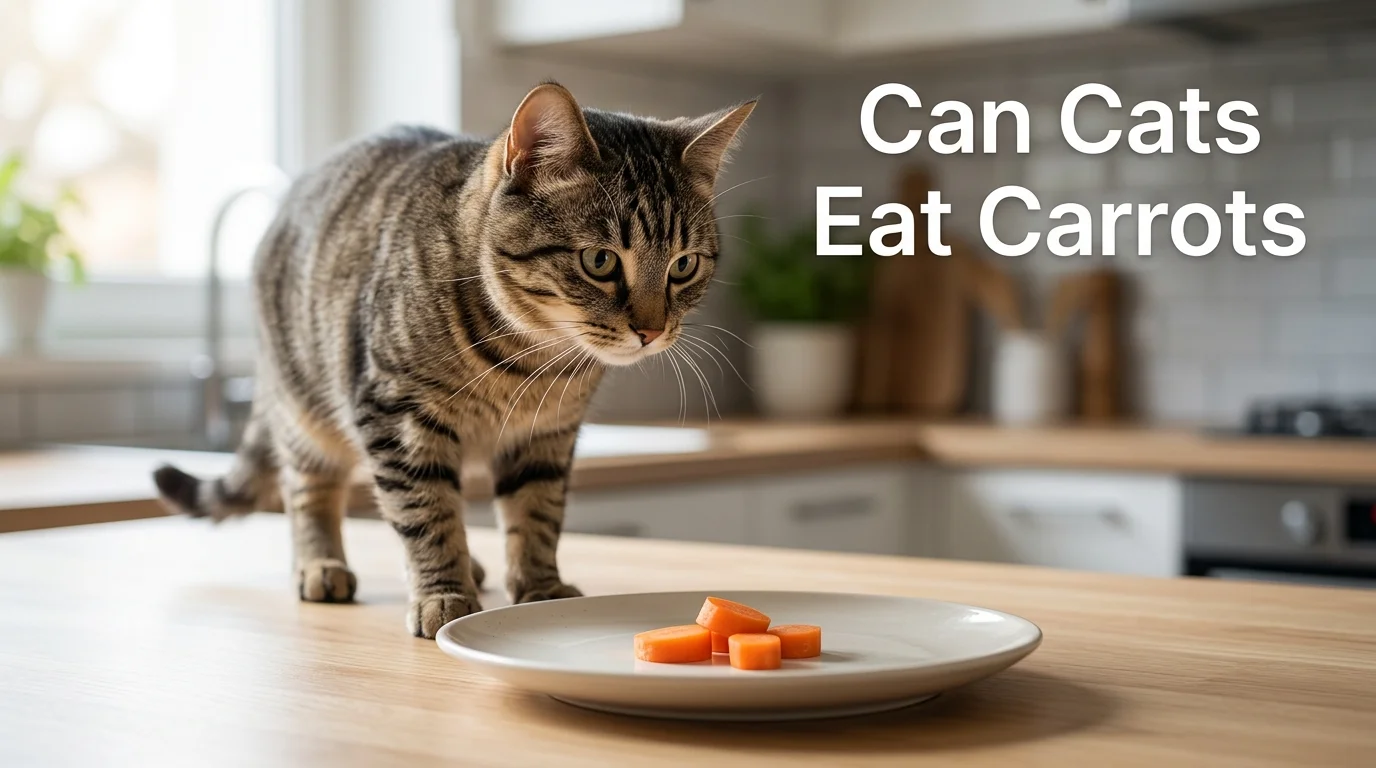
Yes, most healthy adult cats can eat a small amount of plain, cooked carrot. Serve it soft, unseasoned, and cut into tiny pieces to reduce the risk of choking. Keep it occasional because cats need a complete meat-based diet, and stop if your cat develops vomiting, diarrhea, or swallowing trouble.
Can cats eat carrots safely at home? Usually, yes, when the vegetable is plain, soft, and offered in tiny amounts. The bigger concerns are choking, digestive upset, and unsafe ingredients added during cooking.
This orange root isn’t required for feline nutrition. Cats need nutrients found in animal tissues because they are obligate carnivores. A balanced cat food should remain the main source of daily calories and essential nutrients.
| Question | Practical answer |
|---|---|
| Is plain carrot toxic? | No. Small amounts are generally considered safe for most healthy adult cats. |
| Raw or cooked? | Cooked and softened is safer because hard pieces can be difficult to chew. |
| How much? | Start with one or two tiny pieces and keep all treats within the daily allowance. |
| Seasonings? | Skip butter, salt, sauces, onion, garlic, and spice blends. |
| When to call a vet? | Call for repeated vomiting, choking signs, breathing trouble, or concerning mixed-food exposure. |
Key takeaways: Plain, softened carrot can be an occasional treat for many healthy adult cats. Hard chunks raise choking risk, and treats should stay within the daily calorie allowance. Avoid unsafe seasonings, and contact a veterinarian for persistent symptoms or uncertain ingredients.
Are Carrots Safe for Cats?
Plain carrot is generally safe for healthy adult cats when the serving is small. Veterinary-reviewed sources treat it as an occasional snack rather than a dietary staple. The safest approach is to serve it soft, plain, and cut into tiny pieces.
Raw pieces are not poisonous, but their firmness creates a practical safety problem. A cat may bite off a chunk thatis hard to chew or swallow. Cooking until soft lowers that risk and makes portion control easier.
Cats are obligate carnivores, which is why feline feeding guidance keeps meat at the center of the diet. Their nutritional needs depend on nutrients supplied by animal products. Vegetables can appear in diets, but they do not replace complete feline food.
Are They Good for Cats Nutritionally?
This vegetable provides fiber and several plant nutrients, but cats do not need it for a balanced diet. Its practical value is mainly variety for cats that enjoy the texture. It should not be promoted as a necessary supplement or wellness food.
One common claim involves beta-carotene and vitamin A. A 2002 Journal of Nutrition study found that cats absorb beta-carotene but do not convert it into vitamin A. They require preformed vitamin A from animal-based dietary sources instead.
That distinction matters because human nutrition claims do not always transfer to cats. A colorful vegetable may be nutritious for people but may not meet feline nutrient requirements. Your cat gains more from a complete diet than from adding extra plant foods.
How to Prepare a Small Serving Safely
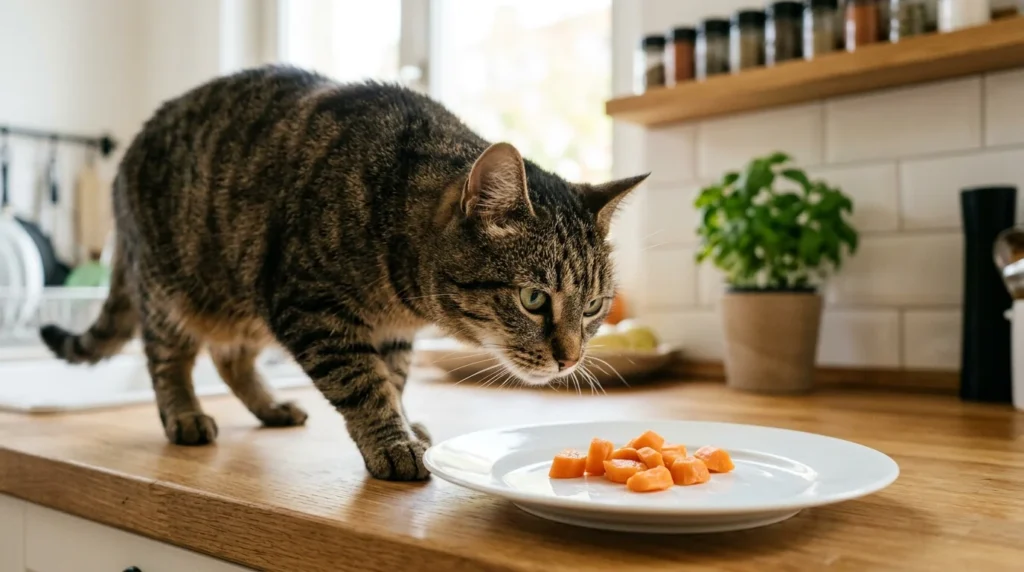
Wash the vegetable, then steam or boil it until it softens. Let it cool before cutting it into pieces smaller than a typical treat. Serve it plain without oil, butter, sugar, salt, or seasoning.
- Cook until soft enough to mash with a fork.
- Cut or mash the serving into tiny pieces.
- Offer one or two pieces the first time.
- Watch for vomiting, diarrhea, gas, or refusal to eat.
- Stop offering it if your cat does not tolerate it well.
Do not mix the snack into a large meal on the first try. A small test portion makes any reaction easier to notice. It also prevents a new treat from displacing normal food.
How Much Can a Cat Have?
No universal carrot serving fits every cat. Calorie needs change with body size, age, activity, and medical conditions. Start smaller than you think, especially when your cat has never tried the food.
Veterinarians generally recommend keeping treats within 10% of a cat’s daily calories. The remaining calories should come from complete and balanced food. Your veterinarian can set a tighter limit when weight or disease changes calorie needs.
For most healthy adults, one or two tiny pieces are enough for a first taste. The goal is not to create another daily food group. Treat the vegetable as an occasional extra, not a regular side dish.
What Ingredients Make Carrot Dishes Unsafe?
The vegetable may be harmless, but the recipe around it can create the problem. Onion and garlic are especially concerning because cats are sensitive to Allium compounds. Pet poison-control guidance warns that these ingredients can damage a cat’s red blood cells.
Butter, creamy sauces, salt, sugar, and spice blends also make sharing less predictable. They add calories or ingredients your cat does not need. Plain preparation keeps the decision simple and reduces avoidable risks.
Check mixed dishes before letting your cat lick or bite. Soups, roasted vegetables, casseroles, and baby foods may contain onion or garlic. Readslife’s Food section can help identify human ingredients, but pet safety still needs veterinary guidance.
What If Your Cat Ate Too Much?
A small accidental bite of plain, soft carrot usually calls for observation, not panic. Watch for vomiting, diarrhea, reduced appetite, abdominal discomfort, or unusual behavior. Remove the remaining food so your cat cannot eat more.
Seek veterinary help for repeated vomiting, ongoing diarrhea, severe lethargy, or signs of choking. Gagging, pawing at the mouth, breathing trouble, or collapse need urgent attention. Mixed dishes deserve faster advice when onion, garlic, or unknown ingredients were present.
Keep the packaging or recipe when a prepared food caused the exposure. Exact ingredients help a veterinarian or poison specialist judge risk more accurately. Do not induce vomiting unless a veterinary professional specifically instructs you.
A Simple Three-Check Rule Before Sharing Human Food
Use three questions before offering any bite: texture, ingredients, and amount. The texture should be easy to chew, and the ingredient list should be simple. Keep the amount small enough to preserve the main diet.
This quick check works for more than one vegetable. It helps separate a plain food from a risky prepared dish. You can browse the Readslife Pets section for more household pet-safety topics.
Readslife also covers plant exposure in its guide on rosemary safety for cats. The same principle applies there because form and added ingredients can change risk. Checking the whole product is safer than judging one ingredient alone.
Can Kittens Eat This Vegetable?
Kittens have less room for nutritionally incomplete extras because they are growing quickly. Their main diet should match their life stage and provide complete nutrition. A vegetable snack offers no advantage over a properly formulated kitten food.
If a healthy older kitten steals a tiny soft piece, the plain vegetable alone is unlikely to cause serious harm. Still, deliberate feeding is unnecessary, especially for young or sensitive kittens. Ask your veterinarian before adding people food to a kitten’s routine.
Use extra caution with kittens that have diarrhea, poor appetite, or another health problem. New foods can complicate symptoms or make intake harder to track. A veterinarian can advise whether any treat belongs in the diet.
Can Cats Eat Carrots Raw or Cooked?
Cooked is the safer default because soft texture reduces chewing and choking concerns. Raw pieces are firm and can break into awkward chunks. If your cat steals a tiny raw shaving, the concern is usually size and texture.
Do not offer whole baby carrots or thick slices as chew toys. Cats do not grind tough plant material the way many people expect. Soft, finely chopped food is easier to control and supervise.
Skip carrot juice as a routine treat. It does not improve a complete feline diet, and prepared juices may contain extra ingredients. Fresh water remains the appropriate everyday drink for cats.
FAQ About Cats and Carrots
Can cats eat carrots every day?
They can have a small taste occasionally, but daily feeding is unnecessary. Repeated extras can crowd out complete food or raise total calories. Use treats for variety while keeping a balanced diet the main focus.
Can a cat eat carrot baby food?
Only consider a product after checking every ingredient. Some baby foods contain onion, garlic, salt, or other additions unsuitable for cats. Plain cooked vegetables are easier to assess than a mixed product.
Are cooked carrots better than raw pieces?
Cooked, softened pieces are usually the safer option for home feeding. They reduce the mechanical risk created by hard chunks. Keep the portion tiny and remove all seasonings.
Should cats with diabetes or digestive disease have this treat?
Ask the veterinarian managing the condition before adding any new treat. Medical diets may require strict control of calories, carbohydrates, fiber, or ingredients. A safe food for one cat may not fit another cat’s plan.
The Bottom Line
A tiny amount of plain, soft carrot can be an occasional treat for many healthy adult cats. Preparation matters more than any claimed health benefit. Keep pieces small, avoid seasonings, and protect the rest of the diet.
Your next step is simple if your cat seems curious. Offer one tiny cooked piece and watch how your cat responds. Contact your veterinarian if symptoms appear, you’re unsure about ingredients, or a medical condition affects your diet choices.