
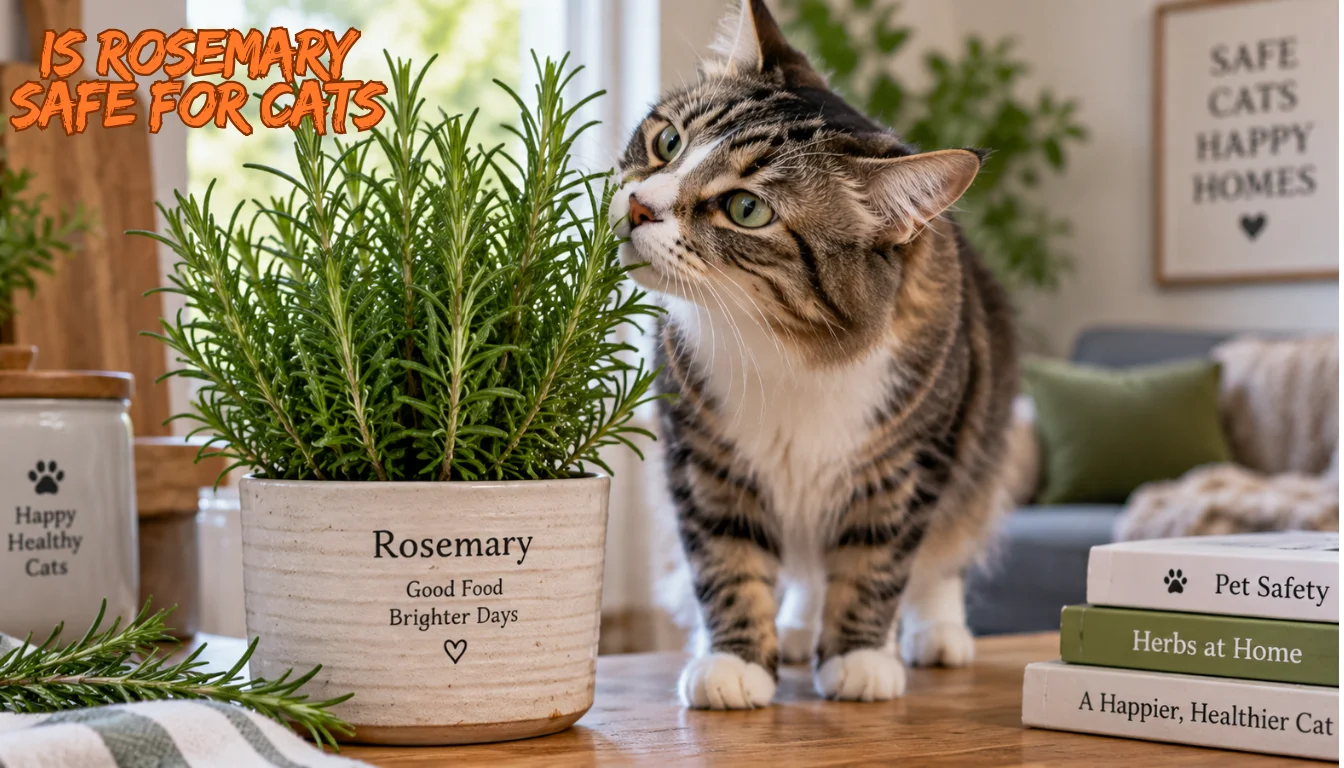

If you’re wondering, is rosemary safe for cats? The reassuring answer is that the plain culinary herb isn’t considered toxic. The ASPCA lists the plant as non-toxic to cats, dogs, and horses. Still, the concentrated oils made from the plant require much more caution around cats.
Yes, plain fresh or dried rosemary is considered non-toxic to cats. A small nibble is unlikely to cause poisoning, although eating a large amount of plant material may upset the stomach. Concentrated essential oil is different and should not be given to cats or applied directly to their skin or fur.
| Is Rosemary Safe for Cats | Short answer |
|---|---|
| Is the rosemary plant toxic to cats? | No. The ASPCA lists it as non-toxic. |
| Can a cat nibble fresh leaves? | A small accidental nibble is generally low risk. |
| Is dried culinary herb safe? | Small amounts are generally considered non-toxic. |
| Can too much cause problems? | Yes. Plant material may cause vomiting or diarrhea. |
| Is concentrated essential oil safe? | Avoid giving it orally or applying it directly. |
| When should you call a vet? | After concentrated oil exposure, persistent symptoms, or any severe reaction. |
TL;DR
- Plain fresh or dried culinary herb is considered non-toxic to cats.
- A large amount may still lead to digestive upset, so it is not a useful everyday treat.
- Concentrated essential oils present a different risk because cats are particularly sensitive to these substances.
- Serious signs such as weakness, tremors, breathing trouble, seizures, or repeated vomiting need prompt veterinary attention.
- U.S. owners can contact their veterinarian, ASPCA Poison Control, or Pet Poison Helpline after a concerning exposure.
Is Rosemary Safe for Cats to Eat?
The ASPCA’s toxic and non-toxic plant database classifies this common kitchen plant as non-toxic to cats. That classification means a small accidental bite of a plain leaf is not expected to cause the type of systemic poisoning associated with dangerous plants. Veterinary-reviewed guidance also treats small amounts of fresh or dried culinary herb as generally low risk.
Non-toxic does not mean a cat should be encouraged to eat a pot full of herbs. The ASPCA notes that consuming plant material can still lead to vomiting or gastrointestinal upset, even when the plant itself is classified as non-toxic. Cats also have no nutritional need to make this herb a routine part of their meals.
For more articles centered on animal care and household pet questions, readers can also browse the Readslife Pets section. Keeping pet-safety information together makes it easier to check unfamiliar foods, plants, and household products before your cat encounters them.
Fresh Herb, Dried Leaves, Oil, and Diffusers Are Not the Same
Pet owners may encounter the same plant in several forms, but those forms should not be treated as interchangeable. A sprig in the garden is far less concentrated than a bottle of essential oil. Understanding that difference is one of the most useful ways to avoid accidental exposure.
| Form | General concern for cats | Practical approach |
|---|---|---|
| Fresh culinary leaves | Low toxicity risk | Prevent excessive chewing. |
| Dried culinary leaves | Low risk in tiny amounts | Do not use as a regular supplement. |
| Food seasoned with the herb | Depends on other ingredients | Check the entire ingredient list. |
| Concentrated essential oil | Higher concern | Keep inaccessible and never apply directly. |
| Active oil diffuser | Possible inhalation and fur exposure | Use extra caution or avoid around cats. |
| Extracts and unknown herbal products | Concentration varies. | Ask a veterinarian before use. |
The distinction matters because essential oils contain concentrated volatile compounds. The Merck Veterinary Manual explains that these oils can be absorbed through the gastrointestinal tract, skin, lungs, and mucous membranes. Cats are particularly susceptible to essential-oil toxicosis because their bodies process some compounds differently.
Why Rosemary Essential Oil Needs More Caution Around Cats
Don’t treat a bottle of rosemary essential oil like the leaves used in cooking. Merck advises against directly applying concentrated essential oils to pets, and the ASPCA likewise recommends keeping concentrated oils away from animals to prevent ingestion or skin exposure. A cat can also swallow residue later while grooming its coat.
Diffusers create another route of exposure. Merck notes that active diffusers can release tiny oil droplets that may settle on an animal’s coat before being swallowed during grooming. Cats with respiratory problems may also be more vulnerable to irritation from airborne oils, so households with these pets need added caution.
Signs associated with essential-oil poisoning can include vomiting, drooling, weakness, poor coordination, tremors, breathing problems, and seizures. The symptoms depend on the oil, concentration, amount, and route of exposure. Treat severe signs as a veterinary emergency rather than monitoring at home.
What to Do If Your Cat Ate the Plant
A cat that takes one or two small bites from a plain plant and remains normal can usually be observed for digestive symptoms. Remove access to the plant so your pet cannot return for a larger meal. Watch for vomiting, diarrhea, drooling, reduced appetite, or unusual behavior over the following hours.
If your pet ate a large amount or symptoms continue, contact your veterinarian for advice. The situation changes if the exposure involved concentrated oil, an extract, liquid potpourri, or another formulated product. In those cases, professional guidance is safer than assuming the non-toxic plant classification applies to the concentrated product.
For broader health information, Readslife also maintains a Health section. Pet poisoning is a specialized veterinary issue, though, so a veterinarian or animal poison-control service should guide urgent decisions.
What to Do After Essential-Oil Exposure
If concentrated oil gets on your cat or is swallowed, move the animal away from the source and contact a veterinary professional. Do not try to make your cat vomit unless a veterinarian or poison-control specialist specifically tells you to do so. The Pet Poison Helpline also advises against giving home antidotes without professional direction.
For U.S. pet owners, ASPCA Poison Control is available at (888) 426-4435, and a consultation fee may apply. Pet Poison Helpline is available 24/7 at (855) 764-7661, with its current site listing an $89 incident fee. Save these numbers before an emergency so you do not have to search for them while your pet is showing symptoms.
Bring the product label or packaging if a veterinarian asks you to come to a clinic. The ingredient list and concentration can help professionals judge the likely risk more accurately. If your cat has breathing difficulty, collapses, develops tremors or seizures, or becomes severely weak, seek emergency veterinary care without waiting for symptoms to improve.
How Much of the Herb Can a Cat Have?
There is no good reason to establish a regular serving size for cats because the plant is not a necessary part of feline nutrition. Veterinary guidance generally limits any deliberate exposure to tiny amounts of the plain fresh or dried herb. A curious cat can sniff the plant without needing to eat it.
If your pet repeatedly chews household plants, consider redirecting that behavior toward an appropriate alternative rather than offering more culinary herbs. PetMD lists cat grass among options commonly chosen for feline households. Identifying decorative and culinary plants by exact species also reduces the chance of confusing a safe plant with a harmful one.
Be Careful With Seasoned Human Food
Food with a little rosemary isn’t automatically dangerous because of that ingredient, but the rest of the recipe matters. Garlic, onion, chives, and related Allium ingredients can damage cats’ red blood cells, and concentrated powders can pose particular concerns. Rich sauces, excessive salt, and other ingredients may add further problems depending on the dish.
For that reason, giving a cat scraps from seasoned chicken, potatoes, sauces, or marinades is less predictable than offering its normal food. Check the full ingredient list rather than focusing on one herb. Readers interested in human recipes and ingredients can browse the Readslife Food section while keeping pet meals separate.
Does the Herb Have Health Benefits for Cats?
The plant contains compounds studied for antioxidant and other biological properties, but that does not mean cats benefit from eating fresh leaves at home. Current veterinary guidance does not establish a need to supplement a healthy cat’s diet with this herb. A nutritionally complete cat food should provide the nutrients a typical healthy animal needs.
This distinction matters because “non-toxic” and “beneficial supplement” are different claims. The evidence supporting a plant’s safety does not automatically prove that feeding extra amounts improves feline health. If you are considering an herbal extract or supplement for a medical reason, ask your veterinarian about the specific product and dose first.
How to Keep a Cat-Safe Herb Area at Home

You don’t need to remove a plain culinary plant from your home just because you have a cat. Place pots where repeated chewing is unlikely, clean up fallen leaves, and store concentrated oils or extracts securely. Check every plant’s exact identity before bringing it into a space your cat can reach.
Store diffuser liquids and essential-oil bottles in closed cabinets rather than on open counters. If you use a diffuser, prevent your cat from accessing or knocking over the unit and consider avoiding it around animals with respiratory disease. Merck also recommends ventilating and limiting exposure when using essential oils around pets.
The Bottom Line for Cat Owners
The plain culinary herb is classified as non-toxic, so an accidental small nibble is unlikely to cause serious poisoning. The bigger household risk is concentrated essential oil, especially if it can be swallowed, spilled on fur, or dispersed in a way that exposes a cat. Keeping those forms separate prevents much of the confusion surrounding this common kitchen plant.
Your next step is simple: keep concentrated oils out of reach, check mixed foods for unsafe ingredients, and save a veterinary poison-control number in your phone. If your cat has already been exposed and is showing significant symptoms, contact a veterinarian rather than relying on home treatment. This gives your pet the safest response if an ordinary curiosity becomes a genuine poisoning concern.
FAQ About Cats and Rosemary
Is rosemary safe for cats if they only sniff it?
Yes, simply sniffing a plain plant is not considered a poisoning exposure. The ASPCA lists the plant itself as non-toxic to cats. The concern rises with concentrated oils, spills, or aerosolized products rather than an ordinary potted herb.
Can cats eat dried culinary herbs?
A tiny accidental amount of plain dried leaves is generally considered low risk. Large quantities may irritate the digestive system, and there is no nutritional reason to make them a regular treat. Keep herb blends away from cats if they contain garlic, onion, or other unsafe ingredients.
Is rosemary oil safe for cats?
Do not give concentrated oil orally or apply it directly to a cat’s coat or skin. Cats can absorb essential oils through several routes and may swallow residues during grooming. If exposure has occurred, contact a veterinarian or animal poison-control service for advice based on the specific product.
Is rosemary water safe for cats?
A lightly infused water made only with the plain herb is not the same as an essential-oil preparation, but there is no reason to add it to a cat’s drinking water. Products marketed as herbal waters may contain extracts, fragrances, preservatives, or oils at unknown concentrations. Plain fresh water remains the safer everyday choice unless your veterinarian recommends something different.
Should I call a vet if my cat ate some?
A small nibble of a plain plant with no symptoms is generally something you can monitor while preventing further access. Call your veterinarian if your cat ate a large amount, keeps vomiting, develops diarrhea, stops eating, or begins acting abnormally. Treat concentrated oil exposure or serious neurological or breathing symptoms more urgently.