
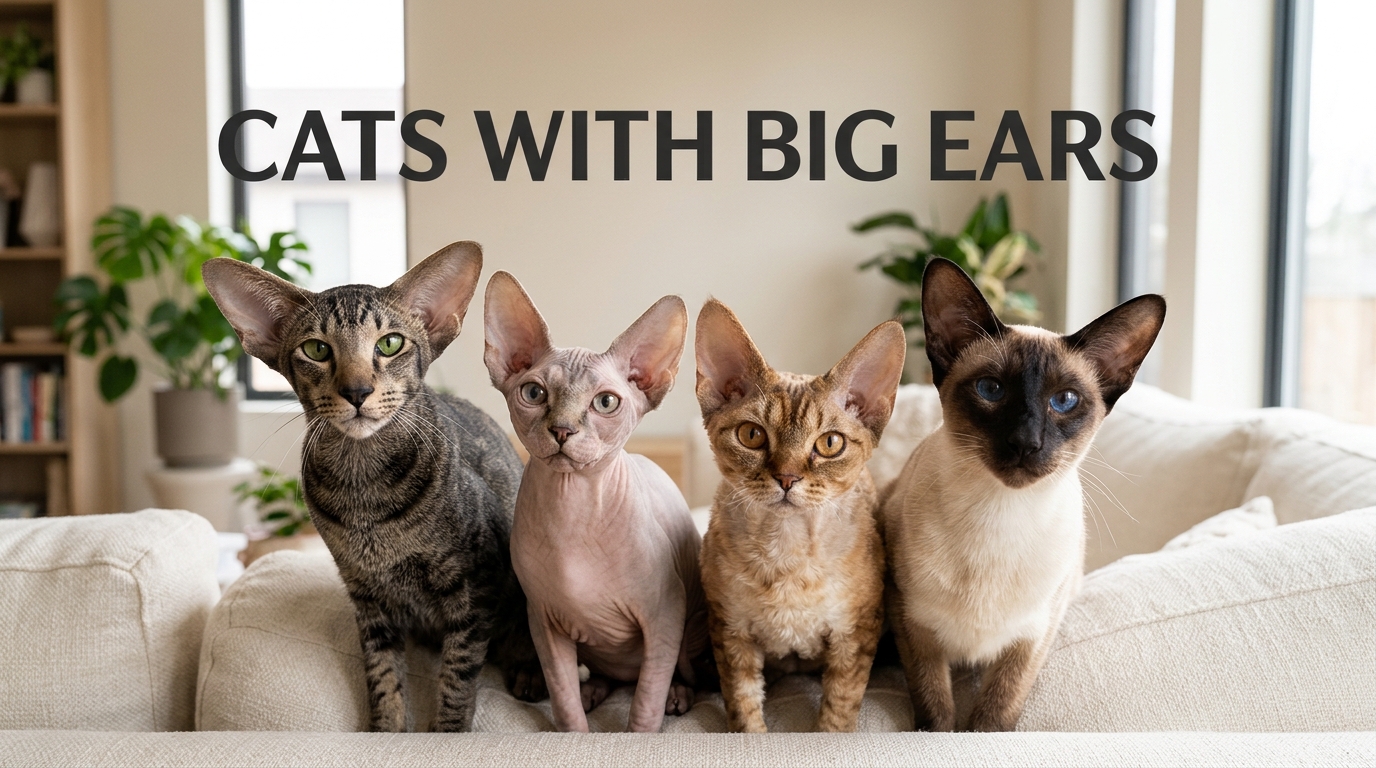
Cats with big ears can look elegant, curious, wild, or almost cartoon-like. Several recognized breeds are especially known for oversized or prominent ears. However, their personalities and care needs differ far more than their memorable appearance suggests.
Quick answer: Oriental Shorthairs, Devon Rexes, Sphynx, Savannahs, Cornish Rexes, Siamese, and Abyssinians are among the best-known large-eared breeds. Ear size alone shouldn’t guide your choice, because activity level, grooming, sociability, health needs, and household compatibility vary widely between breeds.
| Breed | Ear appearance | Typical personality | Best fit |
|---|---|---|---|
| Oriental Shorthair | Extremely large and broad | Social, vocal, affectionate | Interactive homes |
| Devon Rex | Huge and low-set | Playful, people-focused | Families and active owners |
| Sphynx | Very large and upright | Affectionate, energetic | Owners comfortable with skin care |
| Savannah | Tall and prominent | Active, curious, adventurous | Experienced owners |
| Cornish Rex | Large and high-set | Playful, athletic | Active households |
| Siamese | Large and triangular | Vocal, social, intelligent | People wanting close companionship |
| Abyssinian | Large and alert | Curious, energetic | Homes offering enrichment |
| Balinese | Large and pointed | Affectionate, lively | Social households |
| Chausie | Tall and upright | Athletic, confident | Experienced cat owners |
| Peterbald | Large and open | Social, intelligent | Attentive households |
| Javanese | Prominent and pointed | Playful, vocal | Interactive families |
| Donskoy | Large and upright | Friendly, curious | Owners comfortable with special care |
| Somali | Large and alert | Active, intelligent | Homes with climbing space |
Why Do Some Cats Have Such Large Ears?
Ear size is partly determined by genetics and breed standards. Selective breeding has emphasized prominent ears in several pedigreed cats. Body proportions can also make ears appear larger than their measurements suggest.
An Oriental Shorthair illustrates this effect well. Its narrow wedge-shaped head makes broad ears look especially dramatic. The Cat Fanciers’ Association describes Oriental ears as strikingly large, pointed, and wide at the base.
Large ears don’t automatically mean better hearing than a healthy domestic cat. Feline ears already move independently and help locate sounds accurately. Their visible size is primarily a defining physical feature in these breeds.
13 Cats With Big Ears Worth Knowing
1. Oriental Shorthair
Few domestic breeds have ears as visually dramatic as the Oriental Shorthair. The ears extend the lines of its long, wedge-shaped head. Its lean frame makes those broad ears appear even more prominent.
Orientals usually want a lot of interaction with their households. CFA describes them as affectionate cats that often seek attention and communicate frequently. They can suit owners who enjoy an involved, expressive companion.
2. Devon Rex
The Devon Rex combines huge ears with wide eyes and prominent cheekbones. Its ears sit low and have exceptionally broad bases. The CFA breed standard specifically requires strikingly large ears.
This breed tends to stay close to household activity. Devon Rexes are typically playful, social, and people-oriented. Their soft, wavy coat also gives them a distinctive appearance.
3. Sphynx
A Sphynx has little coat, which frames its face and makes its ears especially noticeable. TICA describes huge ears as one of the breed’s most recognizable traits. Those ears may measure several inches in height.
Sphynx cats are usually active and strongly people-oriented. Their limited coat means owners must understand their skin-care and temperature needs. They aren’t automatically hypoallergenic just because they lack a conventional coat.
4. Savannah
The Savannah inherited its striking appearance partly from the African serval. Tall ears sit high on the head and contribute strongly to its wild appearance. TICA calls those large, tall ears one of the breed’s most obvious characteristics.
These cats are usually active, curious, and demanding of enrichment. They often enjoy climbing, interactive play, and learning behaviors. Prospective U.S. owners should also check current state and local rules before acquiring one.
5. Cornish Rex
The Cornish Rex pairs a slender body with large, upright ears. Its unusual proportions give it an alert, distinctive expression. CFA notes that large ears are one of the breed’s immediately noticeable characteristics.
Cornish Rexes tend to be energetic and playful companions. Many enjoy interactive games and frequent attention. Their short, waved coat also separates them visually from most other breeds.
6. Siamese
Modern Siamese cats have long wedge-shaped heads and noticeably prominent ears. The ears continue the head’s triangular lines. This shape creates the elegant appearance associated with contemporary breed standards.
Siamese cats are also known for close relationships with people. They tend to be communicative, active, and interested in household routines. They may feel demanding for someone who wants a highly independent pet.
7. Abyssinian
Abyssinians have relatively large ears that tilt forward, giving them an alert expression. Their lean bodies and short coats make those ears easy to notice. They differ from the extreme wedge shape of Orientals.
This breed usually enjoys movement, exploration, and vertical spaces. Abyssinians often prefer activity to sitting on a lap. They can suit owners willing to provide climbing structures and regular play.
8. Balinese
The Balinese resembles a long-haired Siamese. Its triangular head carries large, pointed ears that remain highly visible. The longer coat softens the outline without hiding the breed’s elegant structure.
Balinese cats tend to be social and enjoy being around their owners. They often enjoy climbing and interactive play. Their longer coats also require more grooming consideration than most short-haired breeds.
9. Chausie
The Chausie has tall ears that reinforce its athletic, wild-looking appearance. The breed developed from domestic cats and the jungle cat. That background contributes to its long-legged, powerful build.
Chausies generally need more activity than a quiet household cat. They benefit from substantial enrichment and room to move. First-time owners should research the breed carefully before committing.
10. Peterbald
Peterbalds have long heads, slender bodies, and large ears. Their coats can range from nearly hairless to fine or altered textures. These features create a refined appearance similar to other eastern-style breeds.
Peterbalds tend to be socially engaged and intelligent. Many prefer regular contact with household members. Owners should understand the care requirements for their coat type.
11. Javanese
Javanese cats share several physical characteristics with Siamese-related breeds. Their pointed ears and elongated heads give them an alert appearance. They also tend to have lean bodies and expressive eyes.
These cats usually enjoy interaction and active play. They may communicate frequently with their owners. A home offering companionship and mental stimulation generally suits them better than long daily isolation.
12. Donskoy
The Donskoy is a Russian breed known for having little or no hair. Large ears stand out because little fur surrounds them. Their facial structure also makes them a striking option for people attracted to unusual-looking cats.
Donskoys are commonly described as curious and social. Their skin and coat characteristics require informed care. Owners considering any hairless breed should discuss routine care with an experienced veterinarian.
13. Somali
The Somali has an alert face framed by prominent ears and a fuller coat. Ear furnishings can make the ears look even more expressive. The breed resembles a longer-haired Abyssinian relative.
Somalis usually enjoy climbing, exploring, and active play. They tend to remain curious about their surroundings. They work well in homes that provide toys, vertical territory, and daily interaction.
Which Large-Eared Breed Is Right for You?
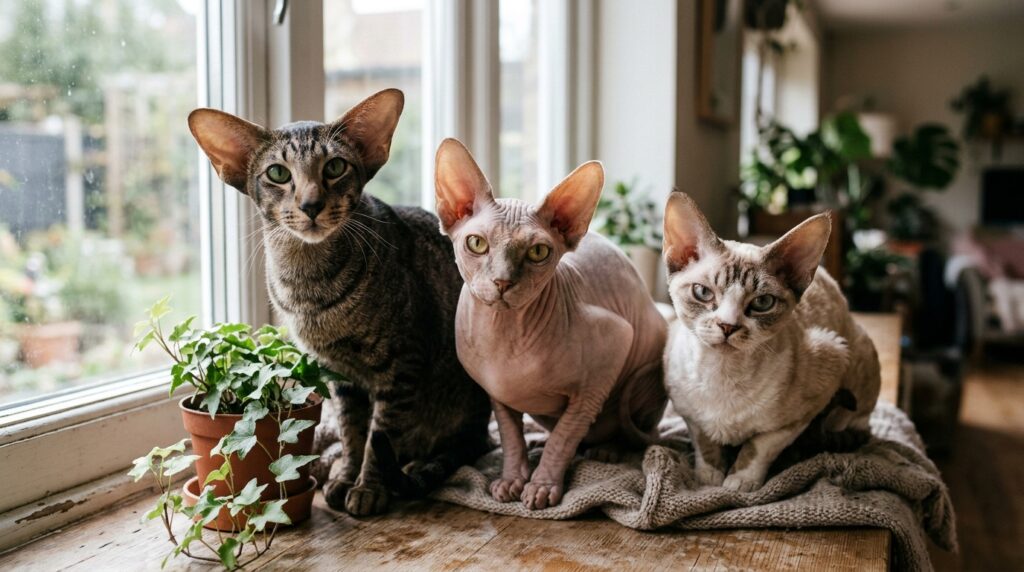
Appearance should be one part of your decision, not the deciding factor. A quiet household may struggle with an intensely social or highly active breed. Grooming requirements can also differ dramatically between similarly striking cats.
Consider daily interaction before choosing a breed. Orientals, Siamese, and several Rex breeds often want a lot of contact with people. Savannahs and Chausies may need more physical and mental stimulation than many households expect.
Skin and coat care also matter. A Sphynx or other nearly hairless breed has different needs from a Somali. Discuss breed-specific health screening and maintenance with reputable breeders and your veterinarian.
If you already share your home with a cat, household safety matters beyond breed choice. Readslife covers practical pet topics in its Pets section. You can use those guides when checking foods, plants, and everyday household exposures.
What Should You Look for Before Getting a Kitten?
Start with temperament rather than appearance alone. Ask breeders how their adult cats behave around people, children, and other animals. A responsible breeder should also discuss breed-specific health testing.
Meet the kitten and, when possible, its mother before deciding. Look for clean eyes, comfortable movement, normal breathing, and an alert response. Veterinary records should support any health claims the seller makes.
Avoid choosing a kitten because an exaggerated feature looks impressive online. Healthy structure and responsible breeding matter more than extreme proportions. Breed clubs and established registries can help you understand the recognized standard.
Your cat’s everyday environment also deserves attention. Readslife’s guide explaining whether rosemary is safe for cats covers plant and essential-oil precautions. Its guide to feeding carrots to cats safely also explains why preparation and portion size matter.
Do Bigger Ears Need Special Cleaning?
Large ears do not automatically need more frequent cleaning. Healthy feline ears should generally remain relatively clean without aggressive maintenance. Over-cleaning can irritate sensitive tissue and create unnecessary problems.
Check your cat’s ears during regular grooming. Watch for redness, unusual odor, dark debris, swelling, or persistent scratching. Those signs justify veterinary advice rather than repeated home cleaning.
Never insert cotton swabs deep into the ear canal. Your veterinarian can recommend an appropriate cleaner when one is needed. A medical examination is safer when symptoms suggest mites, infection, or inflammation.
Are Big-Eared Cats More Expensive?
Purchase prices vary widely by breed, breeder, location, pedigree, and availability. A rare breed can cost substantially more than an adopted domestic cat. The initial price is only one part of the lifetime cost of ownership.
Budget for veterinary care, food, litter, enrichment, insurance, and emergency expenses. Certain breeds may also benefit from specific health screening. Those continuing costs matter more than saving money on the initial purchase.
Adoption remains worth considering if pedigree is not essential. Shelters frequently have distinctive mixed-breed cats with striking ears and personalities. Their exact ancestry may be unknown, but their needs can still match your household well.
Frequently Asked Questions
What are big-eared cats called?
No single official name covers every large-eared breed. Common examples include Oriental Shorthairs, Devon Rexes, Sphynx, Savannahs, and Cornish Rexes. Several Siamese-related breeds also have prominent pointed ears.
Which cat breed has the most noticeable ears?
The Oriental Shorthair is among the most visually dramatic examples. Its breed standard calls for strikingly large ears with broad bases. The Sphynx and Devon Rex are also especially recognizable for ear size.
Do large ears mean a cat is part wild animal?
No, prominent ears alone do not indicate recent wild ancestry. Many fully domestic pedigreed breeds naturally have large ears. Savannahs are a notable exception because their development includes African serval ancestry.
Are large-eared breeds good family pets?
Many can be excellent companions in the right home. Temperament depends on breed, socialization, individual personality, and the home environment. Families should choose according to activity and care needs rather than appearance.
Are hairless big-eared cats hypoallergenic?
Hairlessness does not guarantee a person will avoid allergic reactions. TICA specifically notes that Sphynx cats are not automatically hypoallergenic. Anyone with allergies should spend time around the breed before committing.
Choosing a Cat for More Than Its Ears
Big-eared breeds can be memorable, but appearance tells you little about daily compatibility. Compare energy, grooming, sociability, health needs, and available space before deciding. Those factors will affect your relationship every day.
An Oriental may suit someone wanting constant interaction and conversation. A Savannah can appeal to an experienced owner prepared for intense activity. A shelter cat may offer the distinctive appearance you love with fewer breed-specific expectations.
Take time to meet several cats before you choose. Ask detailed questions and review veterinary information before bringing one home. The right match should fit your life long after the striking ears stop feeling unusual.