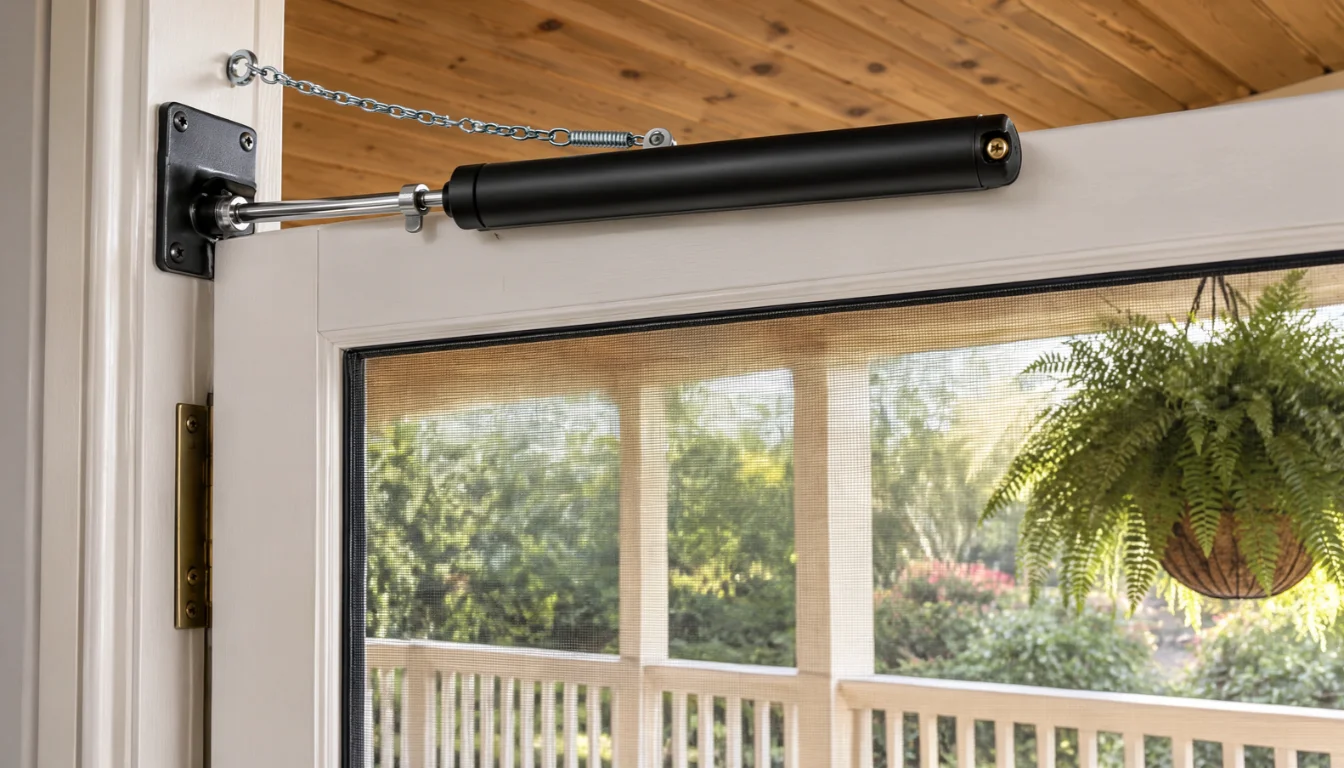
A door closer for screen door use should shut the door smoothly without slamming or stopping short. For most U.S. homes, an adjustable pneumatic model gives the best balance of price, installation ease, and control. Heavier storm doors may need a heavy-duty pneumatic unit, two cylinders, or a hydraulic option.
Quick answer: Most lightweight and medium screen doors work well with an adjustable pneumatic closer. Choose a heavy-duty model for heavier storm doors or windy locations. Look for adjustable closing speed, compatible mounting hardware, and a hold-open feature if needed. Always match the closer to the door’s weight and swing direction.
Quick Comparison of Screen Door Closer Options
| Type | Best For | Main Benefit | Main Drawback |
|---|---|---|---|
| Standard pneumatic | Light or medium screen doors | Affordable and easy to adjust | Less force for heavy doors |
| Heavy-duty pneumatic | Storm doors and heavier panels | Stronger closing action | Needs careful adjustment |
| Hydraulic | Heavier doors needing smoother control | Consistent, controlled movement | Usually costs more |
| Spring closer | Lightweight doors | Simple design | Less precise speed control |
| Two-closer setup | Large full-view storm doors | Better load distribution | More hardware to install |
Key Takeaways
- A pneumatic closer suits most standard residential screen doors.
- Heavy storm doors may need stronger hardware or two closers.
- Adjustable speed helps prevent slamming and weak latching.
- Hold-open hardware is useful when carrying groceries or furniture.
- Correct bracket placement matters as much as the closer itself.
- Small speed adjustments usually work better than large screw turns.
What Does a Screen Door Closer Do?

A door closer for a screen door controls how a hinged screen or storm door returns after someone opens it. Most residential units combine a spring with controlled air or fluid resistance. This design slows the door instead of letting the spring snap it shut.
That controlled movement protects hinges, latches, frames, and fingers from repeated impacts. It also helps keep insects outside because the door closes automatically. A properly adjusted unit should finish with enough force for the latch to engage.
Many common residential models also include a hold-open washer or button. Lowe’s lists adjustable pneumatic models with hold-open hardware and seasonal latching adjustments. Some models can also be used in pairs on heavier full-view storm doors.
Best Door Closer for Screen Door Use by Situation
For an ordinary aluminum or vinyl screen door, start with a standard pneumatic unit. These models are inexpensive, widely available, and simple to replace. Their adjustment screw lets you change closing speed without changing the entire installation.
Choose a heavy-duty pneumatic model when the panel has substantial glass or extra weight. Strong wind exposure can also justify the heavier option. Current National Hardware models support adjustable speed and stronger outswing applications.
A hydraulic closer makes more sense when smooth movement matters more than low cost. Hydraulic systems use fluid instead of air for damping. They generally suit heavier doors that need steadier movement through the closing cycle.
Our Recommendation for Most Homes
For most American homeowners, an adjustable pneumatic closer is the practical first choice. It costs less than many hydraulic alternatives and requires basic tools. Replacement hardware is also easy to find at major home-improvement stores.
Move to a heavy-duty model when the existing closer cannot latch the door reliably. Consider two compatible units when the manufacturer recommends that arrangement for a heavy storm door. Avoid solving every problem with extra spring force because poor alignment may be the real cause.
Features Worth Checking Before You Buy
Closing-speed adjustment should be near the top of your checklist. This feature lets you reduce slamming without making the door stop before reaching the latch. Many common cylinders use a screw at one end for this adjustment.
A hold-open feature is useful around busy entrances. Traditional systems may use a sliding washer on the rod. Newer models sometimes use a push button that holds the door after you open it.
Check whether the product supports your door material and weight. A unit made for lightweight aluminum screening may struggle with a full-view glass storm door. Manufacturer specifications should take priority over appearance or price.
Also confirm whether the hardware works with your swing direction. Many residential models are intended for outswinging doors. Reversible products offer more flexibility when replacing older or unusual hardware.
Pneumatic vs. Hydraulic Screen Door Closers
Pneumatic models control movement with air passing through a regulated cylinder. Their simple construction makes them common on residential screen and storm doors. They are usually easier and cheaper to replace.
Hydraulic versions use fluid to regulate the closing action. They can provide smoother resistance on heavier doors. Their added control can be useful where a basic pneumatic cylinder feels inconsistent.
| Factor | Pneumatic | Hydraulic |
|---|---|---|
| Typical residential use | Excellent | Good |
| Light screen doors | Excellent | Often unnecessary |
| Heavy storm doors | Good with correct rating | Excellent |
| Price | Usually lower | Usually higher |
| Adjustment | Simple | Often more controlled |
| Replacement | Easy to find | Depends on model |
Neither design automatically fixes a poorly fitted door. Hinges, latch alignment, bracket placement, and frame condition still affect performance. Check those parts before replacing working hardware.
How to Install a Screen Door Closer
Most replacement installations use one bracket on the jamb and another on the door. The cylinder connects those brackets with a pin or rod. Always follow the template supplied with your specific model.
1. Close and inspect the door. Make sure it swings freely without rubbing the frame.
2. Remove the old hardware. Replace worn brackets if the new kit includes them.
3. Position the jamb bracket. Follow the manufacturer’s measurements instead of copying damaged holes.
4. Attach the closer cylinder. Connect the rod and pins in the recommended position.
5. Mount the door bracket. Keep the hardware straight so the rod does not bind.
6. Test the swing. Open the door fully and let it close without pushing.
7. Adjust the speed. Make small changes until the door closes smoothly and latches.
Ideal Security recommends testing the installed mechanism before final adjustment. Its guidance also explains that bracket or pin positions may change for seasonal screen and glass configurations.
For other household door projects, Readslife also covers manual garage door locking methods. That guide is useful when reviewing door tracks, brackets, and related hardware around a garage entrance.
How to Adjust Closing Speed Safely
Start with small turns of the speed-control screw. A quarter turn can produce a noticeable change on many models. Test the door after every adjustment instead of making several changes together.
Many pneumatic units slow down when the adjustment screw turns clockwise. Turning the screw counterclockwise commonly increases speed. The direction can vary, so follow labels or manufacturer instructions for your model.
Never remove the adjustment screw completely while experimenting. Doing so may damage some closer designs or release internal pressure or fluid. Stop adjusting if the unit leaks, binds, or no longer responds normally.
Why a Screen Door Still Slams or Will Not Latch
A slamming door usually needs more resistance, but the speed screw is not always responsible. Loose mounting screws can change the cylinder angle. A bent bracket can create the same problem.
A door that stops before latching may have too much resistance. It may also have weak spring force, hinge friction, or poor latch alignment. Check whether the door closes freely after temporarily disconnecting the closer.
Seasonal changes can affect doors with removable glass and screen inserts. A glass panel increases weight and changes the force needed for reliable latching. Some closer systems provide a second mounting position specifically for that difference.
Outdoor hardware also lasts longer when the surrounding entry stays dry and maintained. Readslife’s garage door ventilation guide explains moisture, airflow, and other garage maintenance considerations. Those issues can matter around enclosed porches and attached garages.
When Should You Replace the Closer?
Replacement makes sense when adjustment no longer changes the closing behavior. Visible bending, broken brackets, damaged rods, or persistent leaks also point toward replacement. A worn cylinder should not need constant readjustment to work.
Check the door before blaming the mechanism. Tighten loose hinges and inspect whether the latch lines up correctly. A sagging door can make a perfectly good closer appear weak.
Replace the entire mounting set when the manufacturer recommends doing so. Mixing a new cylinder with badly worn brackets can create poor geometry. Matching components usually produce more predictable closing action.
For more household repair and maintenance topics, browse Readslife’s Home Improvement section. It covers related DIY projects for doors, garages, walls, utilities, and home systems.
Common Buying Mistakes to Avoid
Do not choose a closer by color alone. White, black, bronze, and aluminum finishes may look different while hiding major strength differences. Check the duty rating and application first.
Avoid assuming more closing force always means better performance. Excessive force can make the door unpleasant to open and harder on mounting points. The goal is controlled closing with enough final movement to latch.
Do not ignore available mounting clearance. Some hardware needs room between the storm door and the main entry door. Measure the available space before ordering a larger cylinder or arm assembly.
Finally, avoid drilling before reading the included template. Small bracket-position differences can change leverage across the entire swing. Correct installation often solves problems that homeowners mistakenly blame on the cylinder.
Final Buying Advice
Start with the door rather than the product package. Note its weight, material, swing direction, mounting clearance, and exposure to wind. Then choose the lightest suitable mechanism that still closes and latches reliably.
For most homes, that means an adjustable pneumatic closer with compatible brackets and a useful hold-open feature. Heavier doors deserve stronger hardware instead of excessive adjustment on a light-duty model. A careful installation should give you quiet, repeatable closing without repeated slamming.
Frequently Asked Questions
What is the best door closer for screen door installations?
For most residential screen doors, an adjustable pneumatic model is the best starting point. It offers controlled closing, easy adjustment, and affordable replacement. Heavy storm doors may require a heavy-duty pneumatic or hydraulic model.
Can I put a closer on any screen door?
Most hinged screen doors can accept some form of closing hardware. The door must have enough frame strength and mounting space for the selected system. Always check the product’s weight, thickness, and swing requirements first.
Why does my screen door slam shut?
The closer may be adjusted too fast or may no longer provide enough damping. Loose brackets and poor alignment can also produce slamming. Inspect the hardware before increasing or decreasing resistance.
How slow should a screen door close?
The door should move smoothly without hitting people or stopping before the latch. There is no single ideal number of seconds for every model. Adjust it until the full swing feels controlled and the latch engages consistently.
Can I use two closers on one storm door?
Some manufacturers allow two closer units on heavier full-view storm doors. The arrangement can spread the load and improve control. Confirm that your specific door and hardware support a two-unit installation.
Do screen door closers work in cold weather?
They can, although temperature changes may affect closing behavior. Pneumatic and hydraulic systems can respond differently as conditions change. Seasonal adjustment may be needed if your door becomes noticeably slower or faster.