

Getting a business license in the United States is not a single national application that works for every company. If you are researching how to get a business license, the licenses and permits you need depend mainly on what your business does, where it operates, and which federal, state, county, or city rules apply. Understanding those layers before you open can help you avoid delayed launches, unnecessary applications, fines, and missed renewal dates.
Short answer: To get a business license in the U.S., identify the licenses and permits required for your activity and location, register your business if necessary, obtain applicable tax IDs, and apply through the correct government agencies. Pay required fees, complete inspections when applicable, and keep track of renewal dates after approval.
What Is a Business License?
A business license is government authorization that allows a company or individual to conduct certain business activities within a jurisdiction. However, “business license” is an umbrella term rather than the name of one nationwide document. Depending on your location and industry, the authorization you need could be called a general business license, occupational license, business tax certificate, seller’s permit, professional license, or another type of permit.
It is also important to separate business licensing from business formation. Filing an LLC or corporation with a state creates or registers the legal entity, while a license gives the business permission to conduct a regulated activity or operate in a particular jurisdiction. An Employer Identification Number, or EIN, is another separate item because it is a federal tax identification number rather than permission to operate.
| Requirement | What it generally does | Typical issuing authority |
| Business/entity registration | Creates or registers an LLC, corporation, partnership, or other entity | State |
| General business license | Authorizes business activity within a jurisdiction | State, county, or city |
| Professional/occupational license | Allows regulated professional work | State licensing board or agency |
| Seller’s or sales tax permit | Authorizes applicable sales tax collection | State tax agency |
| Zoning/home occupation permit | Confirms a location can be used for the proposed business | City or county |
| Industry-specific permit | Covers regulated activities such as food service or construction | Federal, state, or local agency |
| EIN | Identifies the business for federal tax purposes | IRS |
Do You Need a Business License?
Many U.S. businesses need at least one license, permit, registration, or other authorization, but the exact combination varies considerably. The U.S. Small Business Administration says licensing requirements and fees depend on business activities, location, and government rules, and businesses can face requirements from more than one level of government. Federal licensing is generally relevant when the business conducts an activity specifically regulated by a federal agency.
A company that does not require a federal license may still have state or local obligations. Construction, plumbing, restaurants, retail businesses, farming, auctions, and vending-machine operations are examples of activities the SBA identifies as commonly regulated at state or local levels. Even home-based businesses can face local zoning or home-occupation rules because zoning restrictions can apply to residential properties as well as commercial premises.
Common reasons you may need an additional license or permit include:
- Operating from a city or county that requires a general business license.
- Providing a regulated professional or occupational service.
- Selling taxable products or services where sales-tax registration is required.
- Preparing, serving, manufacturing, or distributing food.
- Operating a home-based business subject to zoning or home-occupation rules.
- Performing construction, contracting, plumbing, or other regulated trade work.
- Installing signs or making regulated alterations to commercial premises.
- Conducting activities overseen by a federal regulatory agency.
- Expanding operations into another state, county, or city.
How to Get a Business License in 7 Steps
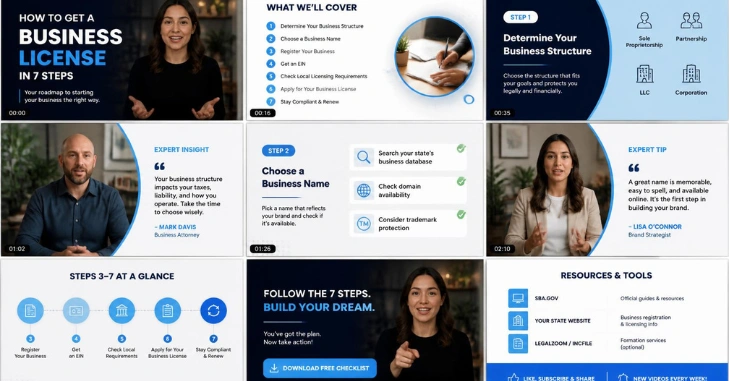
The licensing process becomes easier when you understand and handle the requirements in the right order. Applying randomly for permits can create duplicate work because some applications require your registered business name, entity number, EIN, location, or other information first. The following seven steps provide a practical starting framework for most U.S. small businesses and explain how to get a business license without overlooking important permits or registrations. The wider Readslife business guides also cover related startup and operations topics.
1. Define Exactly What Your Business Will Do and Where It Will Operate
Start by writing down your primary business activity, physical location, products or services, and every jurisdiction where you will operate. A restaurant, freelance designer, online retailer, contractor, and vending-machine operator can all have very different business license requirements even when they are located in the same state. Your location matters because state, county, and municipal governments can impose separate rules.
Do not limit this review to your office or storefront address. Consider warehouses, home offices, additional branches, employees working in other states, and locations where you regularly perform services. If you later expand into another state or locality, the SBA advises checking whether new registration, licensing, permitting, or foreign-qualification requirements apply there.
2. Choose Your Business Structure and Complete Required Registration
Decide whether you will operate as a sole proprietor, LLC, partnership, corporation, or another structure before completing applications that depend on the legal identity of the business. The SBA notes that business structure affects taxes, paperwork, personal liability, and registration requirements, and most businesses also need appropriate tax IDs and licenses or permits. LLCs, corporations, partnerships, and nonprofit corporations generally register with applicable state agencies.
Remember that forming an LLC is not the same as obtaining a business license. Your state formation document establishes the entity, while licensing requirements determine whether that entity can legally perform particular activities or operate at a particular location. A sole proprietor working under a trade name may also need a DBA or fictitious-name registration depending on state and local rules.
3. Get an EIN and Any Required State Tax Accounts
An EIN is a nine-digit federal tax ID issued by the Internal Revenue Service, and many businesses need one for tax, employment, banking, or licensing purposes. The IRS currently provides EINs directly and free of charge, and eligible U.S. applicants can apply online. If you are forming a legal entity such as an LLC, partnership, or corporation, the IRS advises forming the entity with the state before requesting the EIN.
An EIN should not be confused with your actual business license or a sales-tax permit. Depending on the state and what you sell, you may also need state tax registration or authorization to collect sales tax. Keep copies of your EIN confirmation and state tax account information because licensing applications commonly request identifying information about the business.
4. Check Whether Your Industry Requires a Federal License or Permit
Most ordinary small businesses do not obtain a general federal business license, but certain regulated activities require authorization from a federal agency. The SBA identifies federally regulated areas that include agriculture, alcoholic beverages, aviation, commercial fisheries, maritime transportation, mining and drilling, nuclear energy, radio and television broadcasting, and certain transportation activities. The responsible agency and application process depend on the specific activity.
Do not assume a state or city business license replaces a required federal authorization. A business can potentially have federal, state, and local requirements at the same time because each authorization covers a different regulatory purpose. Use the SBA’s federal, state, and local licensing guidance as a starting point and then confirm requirements directly with the agency that regulates your activity.
5. Check Your State, County, and City Requirements
This is the most important research step for most small-business owners because there is no universal state or local licensing system. Some states regulate particular industries centrally, while cities and counties may impose local operating licenses, zoning approvals, health permits, building permits, or other requirements. The SBA specifically recommends researching state, county, and city regulations because industry requirements vary by location.
Start with your state’s official business or Secretary of State website, but do not stop there. Search the official county and city websites for your physical business address and look for sections labeled business licensing, permits, tax certificates, planning, zoning, or occupational licensing. USAGov also provides a directory for finding official state and local government resources when you are unsure which government website to use.
If you operate in multiple cities or states, repeat the search for each relevant jurisdiction. A license issued in one city does not automatically authorize you to operate in another location, and expanding to another state can also create additional registration obligations. Building a location-by-location compliance checklist is safer than assuming your original approval follows the business everywhere.
6. Gather Your Documents and Submit the Applications
Once you know which licenses apply, read each issuing agency’s instructions before starting the application. Different agencies request different information, but having your formation documents, business address, owner information, tax IDs, and description of activities ready can make the process smoother. Businesses in regulated industries may also need proof of professional qualifications, insurance, bonds, inspections, lease information, or other supporting records.
Use the legal business name exactly as it appears on your formation or registration documents when the application requires it. If you operate under a DBA, keep documentation for both the legal entity name and the trade name available. Review the application before paying because errors in addresses, ownership details, business activities, or entity names can create delays.
Pay only through the official government agency or a service you intentionally choose to hire. For example, the IRS states that an EIN itself is free, so a website charging for one is charging for assistance rather than for the federal tax ID. This distinction is useful whenever a search result looks like an official licensing portal but is actually a commercial filing service.
7. Complete Inspections, Display Requirements, and Renewals
Submitting an application is not always the final step. Certain businesses must complete health, safety, zoning, building, fire, or industry-specific inspections before an authorization becomes active. Some jurisdictions also require a license or permit certificate to be displayed at the business premises.
After approval, record the license number, issuing agency, issue date, expiration date, renewal deadline, and login information in one compliance file. The SBA notes that some licenses and permits expire after a set period and that renewal requirements vary, making deadline tracking important. Set calendar reminders well before expiration instead of relying only on a notice from the licensing office.
What Documents Do You Need for a Business License?
There is no single nationwide document checklist because each government agency sets its own requirements. However, several pieces of information appear frequently enough that gathering them before you begin can save considerable time. Requirements can become more extensive when your industry requires professional credentials, inspections, insurance, or financial guarantees. More from us: Iowa Auto Insurance Laws.
| Information or document | Why it may be requested |
| Legal business name | Identifies the applicant |
| Business address | Establishes jurisdiction and zoning |
| Formation documents | Confirms the legal entity |
| DBA or trade-name registration | Confirms an alternate operating name |
| EIN | Provides federal tax identification |
| State tax ID/account | Confirms applicable state tax registration |
| Owner/officer information | Identifies responsible parties |
| Business activity description | Helps determine the correct license category |
| Professional credentials | Required for certain regulated occupations |
| Lease or property information | May be used for zoning or location approval |
| Insurance or bond documentation | Required for some trades and regulated industries |
| Inspection certificates | Confirms health, safety, building, or similar compliance |
Before uploading documents, check whether the agency requires originals, certified copies, PDFs, signatures, notarization, or specific forms. Small inconsistencies can matter, especially when the business name or address differs between formation records, tax accounts, and license applications. Keeping one digital folder containing current versions of all business records can make future renewals much easier.
How Much Does a Business License Cost?
There is no reliable nationwide price for a business license because fees are set by individual agencies and jurisdictions. The SBA states that requirements and fees vary based on the business activity, location, and applicable government rules. A simple local registration may therefore cost much less than a heavily regulated professional or industry license involving examinations, inspections, bonds, or multiple approvals.
Do not confuse your business formation cost with your business license cost. State filing fees for creating an LLC or corporation, DBA fees, professional licensing charges, sales-tax registrations, local permits, inspections, and renewals can all be separate expenses. Include licenses and permits in your startup budget rather than treating the first application fee as the total compliance cost.
The amount you ultimately pay can depend on factors such as
- State, county, and city.
- Business type and industry.
- Number of business locations.
- Professional or occupational requirements.
- Inspection fees.
- Zoning or building permits.
- Required bonds or insurance.
- Initial application versus renewal.
- Revenue, employee count, or other local fee formulas.
How Long Does It Take to Get a Business License?
Approval time also varies too widely for a single national answer. A straightforward online registration can move relatively quickly, while applications that require inspections, zoning approval, background checks, professional board review, or multiple government agencies can take significantly longer. The safest approach is to check the published processing information for every license on your own list before choosing an opening date.
Submit applications as early as the agency permits, particularly if your business needs a physical location. Signing a long-term lease and announcing an opening date before confirming zoning and licensing requirements can create expensive problems if the site cannot be approved for your intended use. Build regulatory processing time into your launch plan instead of treating licensing as a final-day administrative task.
Do Home-Based Businesses Need a License?
Running a company from your home does not necessarily exempt it from licensing or zoning rules. The SBA explains that zoning ordinances can apply to home-based businesses even though they may face fewer restrictions than businesses operating from commercial premises. Local rules can address matters such as customer traffic, signage, employees, parking, noise, or the types of activity permitted in residential areas.
Check with your city or county planning and licensing departments before assuming that a small home operation needs no authorization. This becomes particularly important if customers visit the property, you store substantial inventory, prepare food, install signs, or conduct work that could affect neighbors. Rules from a homeowners association or lease can also exist separately from government licensing requirements.
Common Business License Mistakes to Avoid
Licensing problems often happen because owners treat “business license” as a single document instead of a collection of possible obligations. A city license does not necessarily replace state professional licensing, and forming an LLC does not automatically satisfy local operating requirements. A systematic federal-state-county-city review helps reduce the chance of missing a separate permit.
Watch for these common mistakes:
- Assuming an LLC filing is the same as a business license.
- Paying a third-party website without realizing an official application is available directly.
- Checking state rules but ignoring county and city requirements.
- Forgetting zoning rules for a home office or commercial property.
- Collecting sales tax without checking whether state registration is required.
- Using a license from one location after expanding somewhere new.
- Applying under a business name that does not match official records.
- Forgetting inspections or post-approval requirements.
- Missing expiration and renewal deadlines.
- Assuming an EIN gives permission to operate.
Another mistake is researching only the broad industry instead of the specific activity. For example, vending-machine businesses may encounter local licensing or permitting rules in addition to agreements with property owners because vending is among the activities the SBA identifies as commonly regulated locally. If vending is the business model you are considering, Readslife also has a separate guide to vending machine contracts covering placement agreements and operational considerations.
Examples of How Licensing Can Differ by Business Type
The number of approvals a business needs generally increases when its activities affect public health, safety, property, regulated professions, or taxable transactions. Two businesses located on the same street may therefore have completely different compliance checklists. These examples are illustrative rather than universal, because the actual requirements must be verified with the relevant agencies in your jurisdiction.
- Freelance consultant: May primarily need business registration, applicable local licensing, and tax accounts depending on structure and location.
- Home-based online seller: May need business registration, local home-occupation approval, and applicable sales-tax registration.
- Restaurant: May face local operating, zoning, food-service, health, fire, signage, and other requirements.
- Construction contractor: May need state or local contractor licensing plus project-specific building permits.
- Salon: May require business licensing, establishment approval, and individual professional licenses.
- Vending-machine operator: May face business, vending, food, sales tax, or location-specific requirements depending on products and jurisdiction.
These examples show why copying another company’s licensing checklist is risky. Even two businesses in the same industry can have different requirements because they operate in different municipalities or provide different services. Always verify the rules based on your own activity, address, ownership structure, and expansion plans.
Final Checklist Before You Start Operating
A business license should be treated as one part of a broader compliance process rather than a box you check once. Before opening, verify that your entity registration, tax accounts, federal requirements, state licenses, county permits, city licenses, zoning approvals, and inspections have all been reviewed. Then save the approval documents and create a renewal calendar so compliance continues after your launch.
Use this final check before opening:
- Confirm your legal business structure and registered name.
- Obtain your EIN if applicable.
- Register for required state tax accounts.
- Check federal industry licensing.
- Check state professional and industry requirements.
- Check county licensing and permit requirements.
- Check city business-license requirements.
- Confirm zoning for your location.
- Complete required inspections.
- Pay all application and permit fees.
- Record license numbers and renewal dates.
- Repeat the review whenever your activities or locations change.
The Bottom Line
Learning how to get a business license in the U.S. starts with recognizing that there is no universal application for every company. Your business activity and exact operating location determine which federal, state, county, and city approvals you may need, so the best approach is to research each layer systematically and verify the result with official government agencies. Once approved, keep your records current and monitor renewal dates because licensing is an ongoing compliance responsibility rather than only a startup task.
FAQ
Can I Get a Business License Online?
Many jurisdictions provide online business licensing portals, but availability depends on the issuing agency. Some applications still require additional documents, inspections, mailed forms, or in-person steps even when the initial filing is electronic. Use the official state, county, or city website to determine the approved filing method for your license.
Do I Need an LLC Before I Get a Business License?
Not every business must form an LLC, because sole proprietorships and other structures can operate legally when they satisfy applicable requirements. If you do create an LLC or another legal entity, completing the formation first can provide the legal business information required on later applications. The IRS also advises businesses forming legal entities to register the entity with the state before applying for an EIN.
Is an EIN the Same as a Business License?
No, an EIN and a business license serve different purposes. The EIN identifies a business for federal tax administration, while a business license or permit authorizes particular business activity under the rules of the issuing jurisdiction. Some license applications may ask for your EIN, but obtaining the EIN does not replace required licenses.
Can I Operate a Business Before My License Is Approved?
That depends on whether the license or permit is legally required before your business begins the regulated activity. Opening before required approval can expose a business to penalties, closure orders, or other enforcement depending on the jurisdiction. Confirm the effective date and operating conditions with the issuing government office before serving customers.
Do Business Licenses Expire?
Some business licenses and permits expire and must be renewed, while others may remain valid as long as specified conditions continue to be met. Renewal schedules and fees vary by jurisdiction and license type, and changes in ownership, address, or business activity can sometimes trigger additional filings. The SBA recommends keeping track of applicable renewal requirements rather than assuming a license remains valid permanently.
Where Do I Apply for a Business License?
The correct application office depends on the type of license and the business location. Start with your state’s official business website, then check your county and city licensing or planning departments, and review federal requirements if your activity is federally regulated. The USAGov state and local government directory can help you locate official government resources.