
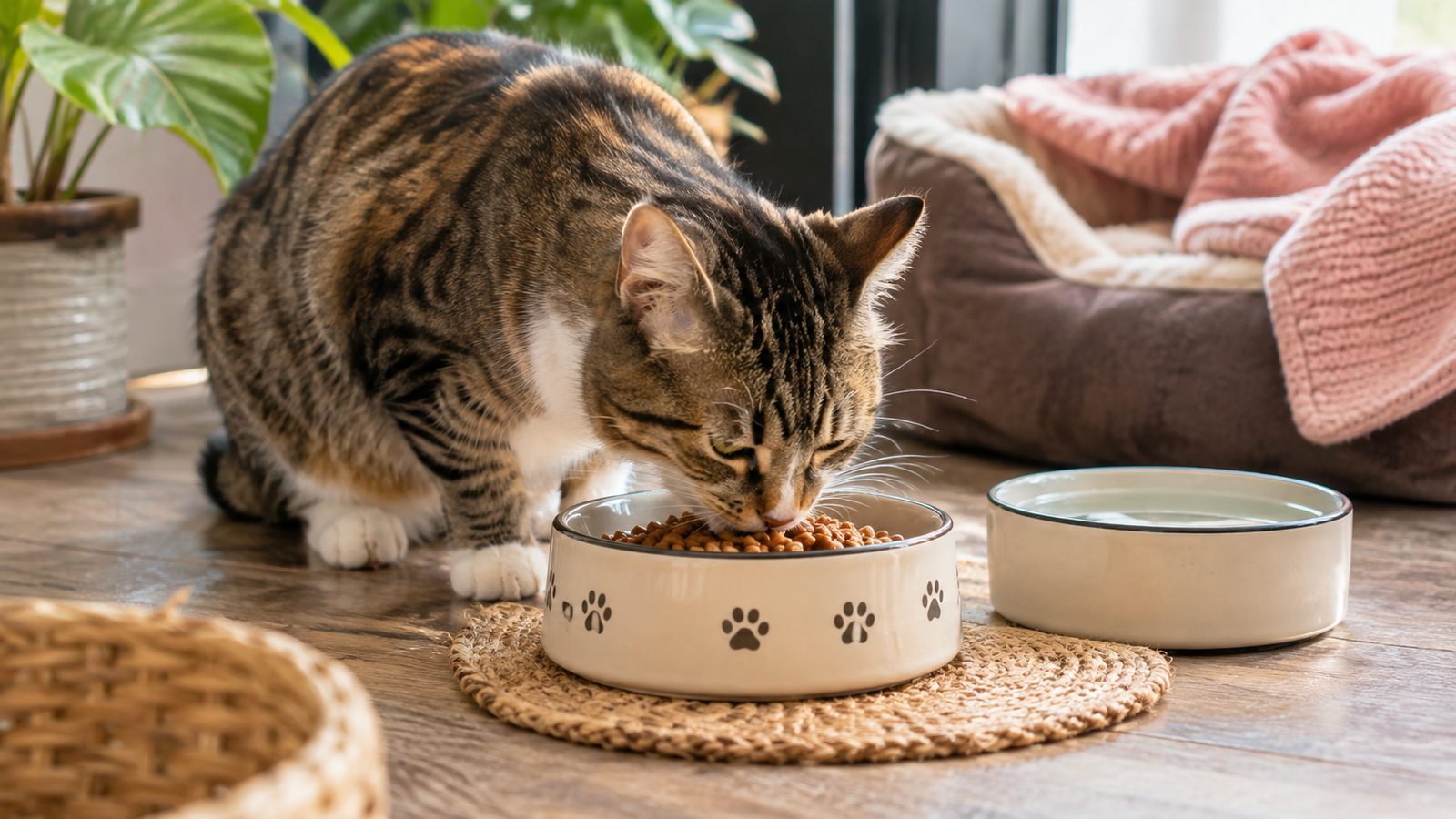
Watching your cat eating can tell you more than whether dinner tastes good. Normal feeding patterns vary, but sudden appetite changes can signal stress, pain, or illness. Knowing your pet’s usual routine makes unusual behavior easier to spot. Cats naturally tend to eat several small meals rather than one large meal. Some nibble slowly, while others finish a portion within minutes. A sudden change from your pet’s normal pattern matters more than one particular feeding style. Quick answer: Healthy cats often prefer several small meals and quiet feeding areas. Eating quickly, leaving food, or occasionally changing preferences may be normal. Sudden appetite loss, constant hunger, repeated vomiting, weight changes, or eating nonfood objects deserves closer attention and may require veterinary care.
Cat Eating at a Glance
| Eating behavior | Often normal? | What owners should watch |
|---|---|---|
| Several small meals | Yes | Total daily intake and weight |
| Leaving some food | Often | Sudden appetite reduction |
| Eating quickly | Sometimes | Regurgitation, weight gain, new hunger |
| Begging frequently | Sometimes | Increased thirst, weight loss, behavior changes |
| Refusing food | Concerning if persistent | Illness, pain, stress, nausea |
| Eating plastic or fabric | No | Pica and possible intestinal blockage |
| Preferring privacy | Yes | Competition or stress around other pets |
Key Takeaways
- Cats commonly prefer smaller, more frequent meals.
- A quiet feeding location can reduce stress during meals.
- Portion needs depend on age, size, activity, health, and food calories.
- Sudden increases or decreases in appetite deserve attention.
- Persistent nonfood eating can be dangerous.
- Repeated vomiting, weakness, breathing problems, or prolonged appetite loss need veterinary advice.
What Does Normal Cat Eating Look Like?
Felines evolved as hunters that captured relatively small prey throughout the day. That history helps explain why many household pets prefer frequent, modest meals. The Feline Veterinary Medical Association also describes frequent small feeding opportunities as natural feline behavior. A healthy animal does not need to empty the bowl every time food appears. Some pets eat briefly, leave, and return later when another meal is available. What matters most is steady intake, stable body condition, and consistent behavior. Meal frequency also depends on how owners manage portions. Scheduled meals make intake easier to measure, while free feeding gives continuous access to food. The ASPCA’s cat nutrition guidance notes that free-choice feeding can encourage overeating in some animals.
Why Does My Cat Eat So Fast?
Fast eating can develop when pets compete for food or expect meals to disappear quickly. Boredom and feeding routines can also influence eating speed. A sudden increase in speed deserves more attention than a lifelong habit. Eating quickly can sometimes lead to regurgitation soon after a meal. The food may appear largely undigested because it returns before normal digestion occurs. Frequent episodes should be discussed with a veterinarian rather than blamed on speed alone. You can try dividing the daily portion into smaller meals. Puzzle feeders may also slow access while providing mental activity. Multi-pet households can benefit from separate feeding stations where each animal eats without competition.
Why Does My Cat Suddenly Want More Food?
A bigger appetite can have simple causes, especially after changes in activity or feeding amounts. Growing kittens also need more energy than typical adults. Still, persistent hunger can sometimes accompany medical problems. Conditions associated with increased appetite can include hyperthyroidism, diabetes, and intestinal parasites. These conditions cannot be diagnosed from hunger alone. Changes involving weight, thirst, urination, stool, or energy give veterinarians useful additional clues. Measure each day’s food instead of repeatedly topping off the bowl. This creates a clearer record of how much your pet consumes. Bring those notes to your veterinarian if increased hunger continues or appears with other changes.
What If My Cat Is Eating Less or Stops Eating?
A sudden appetite reduction should not be dismissed as stubbornness. Pain, nausea, dental problems, kidney disease, digestive illness, stress, and other conditions can reduce food intake. A physical examination may be needed to identify the cause. Contact your veterinarian promptly when a pet stops eating or consumes much less than usual. Veterinary sources such as VCA Animal Hospitals treat a cat that is not eating as a reason to call the vet. A cat that eats nothing for more than about 24 to 48 hours needs veterinary care. The Cornell Feline Health Center reports that hepatic lipidosis, a serious fatty liver disease, can develop when a cat stops eating for even a few days, and that overweight cats are at higher risk. Kittens, seniors, and cats with medical conditions may need help sooner. Seek faster care when poor appetite appears with repeated vomiting, severe weakness, breathing difficulty, pain, or possible poisoning. Suspected string or foreign-object ingestion also needs prompt professional advice. Do not force-feed unless your veterinarian specifically directs you.
Why Do Cats Sometimes Leave Food Behind?
Leaving food does not automatically mean something is wrong. Many felines naturally eat small portions and return later. A large serving may simply exceed what they want during one feeding session. Food smell and texture can influence interest as well. Cats have a strong sense of smell, so stale or refrigerated food may be less appealing. A clean bowl and fresh portion can make mealtimes more inviting. Changes still deserve attention when they become persistent. A pet that suddenly leaves most meals unfinished may be experiencing discomfort or illness. Compare the behavior with its established routine rather than another animal’s habits.
Does the Feeding Area Affect How Much a Cat Eats?
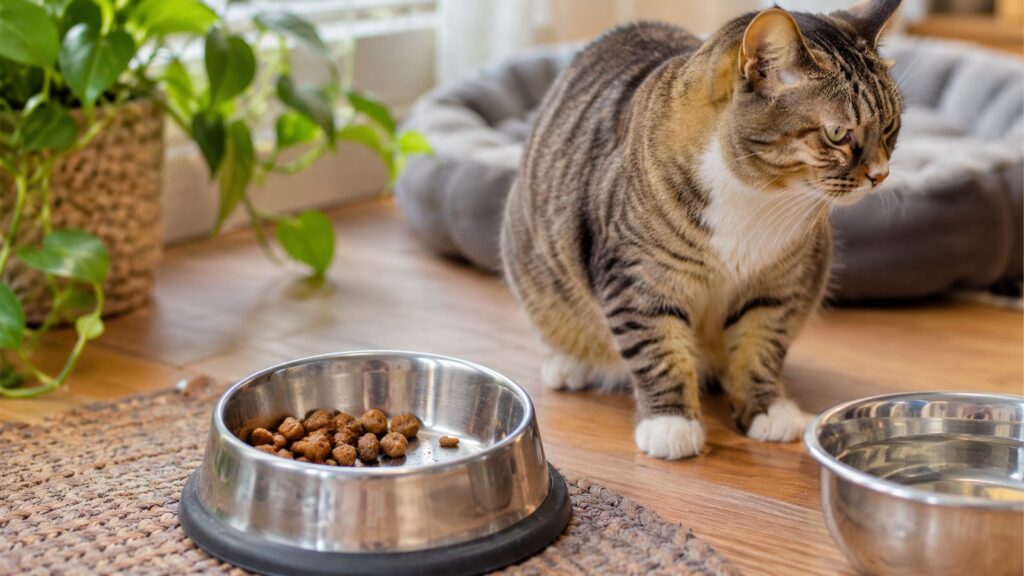
Location can make a meaningful difference. Felines often prefer eating somewhere quiet where they do not feel trapped or challenged. Busy hallways, noisy appliances, and other animals may create unnecessary pressure. Separate feeding stations are especially useful in multi-pet homes. Each animal can eat without guarding its bowl or watching competitors. The Feline Veterinary Medical Association recommends feeding arrangements that account for natural solitary feeding preferences. Keep food away from litter areas and maintain clean dishes. Some pets also prefer food and water placed separately. Readslife’s broader Pets section offers more household care topics for owners.
Can Human Food Affect Eating Habits?
Human food can make regular meals less appealing when table scraps become frequent rewards. Extra foods can also add calories that are difficult to track. A nutritionally complete feline diet should remain the main source of daily nutrition. Not every human ingredient is appropriate for pets. Onions, garlic, chocolate, and grapes or raisins are toxic to cats and should never be offered. Lilies are also dangerous, so keep these plants out of reach, since even a small amount of pollen or vase water can be harmful. Preparation, seasoning, portion size, and the animal’s health all affect safety. For example, Readslife explains how to offer small amounts of cooked carrot safely without replacing a balanced diet. Plants and concentrated products need similar caution. Readslife’s guide to rosemary safety for cats separates ordinary culinary herb exposure from concentrated essential oils. Checking the complete ingredient list is safer than judging a dish by one ingredient.
What Is Pica, and Why Is It Concerning?
Pica describes persistent eating of materials that are not food. Cats may target plastic, fabric, paper, rubber, wool, or other household objects. This differs from occasionally mouthing an object during play. Swallowing these materials can cause digestive irritation or intestinal obstruction. Vomiting, constipation, reduced appetite, abdominal discomfort, or lethargy can accompany a problem. Veterinary evaluation is appropriate when nonfood eating becomes repeated or compulsive. Remove tempting objects when possible while you seek advice about the cause. Do not assume the behavior is merely quirky. PetMD also identifies nonfood eating as one unusual feeding behavior that can require medical or behavioral support.
How to Build a Better Feeding Routine
Start by measuring the total amount offered each day. Follow the food label as a starting point, then discuss individual calorie needs with your veterinarian. Body condition and weight trends help determine whether portions need adjustment. Offer meals in a quiet, predictable location. If several animals share the home, give each one its own feeding space. Puzzle feeders can provide enrichment for suitable healthy pets that eat dry food. Track appetite changes instead of relying on memory. Note the amount eaten, unusual begging, vomiting, stool changes, drinking, and visible weight changes. A short written record can make a veterinary conversation much more useful. Breed and personality can influence household routines, but appearance alone tells little about dietary needs. Owners exploring feline characteristics can also read Readslife’s guide to cats with big ears. Individual health, age, and activity should guide feeding decisions.
Warning Signs That Deserve Veterinary Attention
A single unusual meal may not mean your pet is sick. Repeated or dramatic changes carry more weight, particularly when they occur with other symptoms. Watch the whole animal rather than focusing only on the bowl. Contact a veterinarian about persistent appetite loss or a sudden major increase in hunger. Weight loss despite strong appetite also deserves evaluation. Increased thirst or urination can provide another important clue. Urgent symptoms include difficulty breathing, collapse, severe weakness, repeated vomiting, or suspected poisoning. Possible foreign-body ingestion can also become an emergency. Veterinary care is safer than trying home remedies when serious signs appear.
Frequently Asked Questions
Is it normal for a cat to eat several times a day?
Yes, eating several small meals can fit natural feline feeding behavior. Many healthy animals prefer modest portions spread across the day. Their total daily calories still need to match their individual needs.
Why does my pet beg immediately after eating?
Begging can reflect routine, boredom, attention-seeking, or an insufficient portion. Persistent new hunger can also accompany certain medical conditions. Monitor weight, thirst, and other behavioral changes if the pattern suddenly begins.
Is it normal for cats to eat alone?
Many felines prefer a quiet space without competition from other animals. Separate feeding areas can help multi-pet households reduce tension. A comfortable feeding setup may also make intake easier to monitor.
Should I worry if my pet skips one meal?
One missed meal can happen, but the surrounding circumstances matter. Continued refusal or a major intake reduction deserves veterinary advice. Seek help sooner when vomiting, weakness, pain, breathing trouble, or other concerning signs appear.
Can changing food cause appetite problems?
Yes, an abrupt food change can lead to refusal or digestive upset in some animals. Transitioning gradually gives your pet time to adjust to the new smell, texture, and ingredients. Ask your veterinarian for guidance when a medical diet requires a specific transition.
The Bottom Line
Feeding behavior varies between individual pets, so knowing your animal’s baseline is useful. Frequent small meals, slow grazing, and occasional leftovers may fit a healthy routine. Sudden or persistent changes deserve closer attention. Measure portions, provide a calm eating area, and record meaningful changes. Those simple habits can help you distinguish a preference from a possible health problem. They also give your veterinarian better information when an examination becomes necessary. When something feels clearly different, focus on the change rather than trying endless new foods. Appetite is one useful indicator of feline health. Contact your veterinarian when reduced intake, excessive hunger, repeated vomiting, weight change, or nonfood eating persists. —